We are so pleased to announce the new SWAI board! The Sex Workers Alliance Ireland welcome Leea Berry, Leah Butler and Lianne O’Hara to our board of directors.
Leea Berry is a Domina and activist taking the role of Treasurer of the Board. Her experiences of harassment and eventually eviction by the Gardaí under the Nordic model in Ireland make her an ideal candidate, with lived experience of life as a sex worker in Ireland.
Leah Butler is taking the role of Chair of the Board and has a BA (Hons) in History and Folklore with structured electives in Equality Studies from University College Dublin. She brings a wealth of experience in grassroots activism and community organising to this role.
Lianne O’Hara is taking the role of Secretary. She is a poet and playwright. Her debut play Fluff, following two Dublin strippers through an evening’s work, sold out a six-show run at the Smock Alley Theatre as part of Dublin Fringe Festival 2022. Her deep ties to the sex worker community are invaluable to our organisation.
This board, along with our new coordinator Mardi Kennedy, will ensure a sustainable, sex worker community-focused organisation fighting for the human rights and safety of sex workers on the island of Ireland. To find out more about our team please check out the About Us section of the website.
We are also seeking additional board members for SWAI. If you are interested please read this Board Call Out post and email board@swai.eu. We are actively seeking board members from diverse and non-traditional backgrounds, and particularly welcome applications from current or former sex workers. Come join our team in the fight to ensure the voices of sex workers are heard
Sex Workers Alliance Ireland (SWAI) advocates for the human rights and safety of sex workers on the island of Ireland. SWAI is dedicated to decriminalisation, destigmatisation, and community development through outreach, changes in policy and legislation, and increased visibility of sex work in society.
SWAI is a frontline, sex worker-led and community-focused non-governmental organisation in Ireland. We understand ‘sex workers’ as anyone engaged in transactional sexual services indoor, outdoor, and online – including but not limited to street workers, brothel workers, strippers, escorts, those working in massage parlours, online content creators, and pro dommes. Within this definition, we recognise differences in gender, socio-economic background, ethnicity, migratory status, sexuality, and how these may influence one’s work experiences and definitions of self in relation to sex work (working girl, prostitute, entertainer, dancer, gigolo, masseuse, etc).
SWAI believes in full decriminalisation, human rights for sex workers, equality, confidentiality, bodily autonomy, freedom of movement and migration, inclusion, anti-capitalism, and anti-white supremacy. We have a strict policy of not outing sex workers.
The Role:
Sex Workers Alliance Ireland (SWAI) seeks applications for appointment as directors of its Board, who are Trustees and volunteers.
The Board is made up of six to seven directors, including three officers (Chair, Secretary and Treasurer).
For Board directors, a range of skills are sought, both within and outside the community development sector, to devise and implement a strategy of advocacy, education, and research in relation to the advance of human rights for sex workers, and to govern the organisation, as a company limited by guarantee and not-for-profit NGO.
Responsibilities will include the following:
Providing input to the strategic direction of SWAI and contributing with insight, oversight, and experience in strategic planning in the sector
Policy formation, planning and implementation as required
Governance responsibilities
Essential Skills/Qualities required for the role:
An understanding of and commitment to SWAI’s objectives, in particular advocacy and education in relation to the advance of human rights for sex workers
Commitment to the highest levels of governance
Desirable Skills/Qualities/Profile required for Board members:
Persons with experience in sex work, indoor, outdoor, or online
Persons with experience as Chair, Treasurer, or Secretary
A deep appreciation and knowledge of the community development sector
An understanding of horizontal, non-hierarchical organising
An understanding of the current landscape in relation to sex work in Ireland, both in policy and legal frameworks and in the community
Persons with experience in finance; research; accounting; administration; or
Practising or retired academics, solicitors, barristers, mental health professionals, social workers, in Ireland or Northern Ireland
General duties of a Trustee:
Comply with the organisation’s governing documents
Ensuring the organisation is complying with its purpose for the public benefit
Acting in the best interest of the organisation
Act with reasonable care and skill
Manage the assets of the organisation
Term:
The vacancy will be appointed by co-option on and with effect from 15 February 2023. The term will last until the next Annual General Meeting (September 2023), at which there is a possibility of election for a subsequent term of at least one year.
Board Meetings:
There will be 6 board meetings per year. There will also be monthly team meetings that board directors are requested to attend. Board and team meetings are typically held online.
Diversity:
Sex Workers Alliance Ireland is committed to diversity in appointments to the Board and team, in terms of gender; age; ethnicity; sexual orientation; the inclusion of sex workers and those involved in community development; geography in terms of residence or place of business on the island of Ireland (including both legal jurisdictions).
The Nomination Committee, led by the Chair, has been asked to have regard to the skills and diversity on the Board and to recommend appointments, where possible, on the basis of bringing the Board towards a balance ensuring the highest level of diversity possible.
We particularly welcome applications from current or former sex workers.
Application Deadline:
Applications should be made to board@swai.eu by 15 January 2023 and will be treated strictly in confidence. Please include in your application previous board experience (if any), a short statement outlining your motivation for wanting to join the SWAI Board of Directors, and, if you wish, your status as a sex worker (if any).
New research from University of Limerick tells stories of sex workers who have faced discriminatory behaviour at the hands of the Gardaí
New research, funded by the Department of Justice and published by the University of Limerick today highlights significant Gardaí abuse against sex workers.
One in five street sex workers in Ireland have been sexually exploited by the Gardaí, according to new research published by the University of Limerick today.
The report, “I must be some person” Accounts from Street Sex Workers in Ireland, investigated street workers’ knowledge and experience of the legislation around sex work since the introduction of the 2017 Criminal Law (Sexual Offences) Act. The findings are based on interviews with a sample of 25 street sex workers based in Dublin (15) and Limerick (10), conducted by a team of researchers and peer-researchers, in a collaboration between the University of Limerick and GOSHH.
The report found a deep mistrust by sex workers of An Garda Síochána. It found that sex workers who face rape, violence, or other crimes felt discouraged to report such incidents to Gardai for a range of reasons, including:
a history of trauma inflicted by aggressive Garda tactics from the past among sex workers;
the belief and experience of some officers sexually exploiting street sex workers and abusing their power;
previous cases of sex workers reporting incidents of physical assault or rape, which were dismissed or mishandled, not leading to receiving help or justice, and
a wide-spread stigma around sex work in the Irish society, and hence, sex workers being afraid
of publicity (e.g. news media).
The report also found that around one in five sex workers have experienced incidents of officers manipulating a lack of knowledge of their legal rights. This includes threatening to charge workers with prostitution, despite the fact that outdoor sex work was decriminalised in 2017.
The report found that the 2017 Act, which purportedly aimed to prevent the exploitation and sex trafficking of vulnerable people, has in fact drastically marginalised already vulnerable populations and has made the lives of street sex workers in urban areas even harder.
“Criminalising buying sex drove more clients to visit indoor workers, putting street sex workers at higher risk of abuse by clients due to inability to refuse work opportunities. It also led to increased street presence and patrolling by Gardaí, which limited sex workers’ ability to evaluate potential clients. The Act also doubled the existing criminal penalty for ‘brothel-keeping’, which prevents sex workers of any number working together indoors. This has made being able to work together for safety impossible. In fact, the ability to work together as a way of ensuring safety and security, was the most frequently mentioned issue that the sex workers wish to see changed in the law,” said Linda Kavanagh, spokesperson for SWAI, Sex Workers Alliance Ireland.
The report shows that the state’s law and policing approach, alongside wider societal stigma and discourse, which portrays and treats all sex workers as ‘exploited victims’, instead of treating “sex-work as work” causes additional direct and indirect harm. Sex workers cannot disclose their occupation, sometimes even to family, so lack critical psychosocial support. They feel uncomfortable seeking legal or social supports from state services because of their justified fear of being judged, abused, or harassed.
“Our findings show our current law on sex work negatively affects lives, safety, and wellbeing of sex workers. Portraying all sex workers in Ireland as “exploited victims” and the way the Gardaí are interacting with the street sex workers contribute to violence and stigmatization. This enables very serious incidents of Garda misconduct against sex workers, including sexual assault and verbal abuse, and false legal information surrounding sex work spread by others. This also leads to further marginalisation and isolation of an already economically and psychologically vulnerable population” said Dr. Anca Minescu, author of the report and lecturer in psychology at the University of Limerick.
Billie Stoica, the coordinator of the funded project stated: “The street sex workers who spoke to us had so many aspects of their lives to juggle. Caring for parents and children, negotiating housing, achieving education, or managing addiction. How sex work is policed only added to the pressure they were under, and left them with little or no access to justice.”
The whole research team of authors and contributors, including peer-researchers, wishes to acknowledge and thank the street sex workers who participanted in this project, sharing their stories of survival: “We’re actually good people. We’re people that are just living every day, and we’re alive”, “It’s not like working in a shop, but… it is work […] I’m not robbing people. I’m going out and making me own money”. This sense of agency and free choice in the work they do was amplified by their participation in the research project. The peer-researchers and participants alike found a safe space where their identities were validated and where they were seen as human beings making a living. It was the peer participation design of the research that led to the high validity and quality of our data: authentic honest accounts of street sex workers who survive hardships while fighting the stigma of their profession: “being a working girl is not the worst thing in the world” .
The report provides recommendations for the Department of Justice, which is currently engaged in a review of the 2017 Act, regarding the law and policy around sex work, which include:
The full decriminalisation of sex work, including the purchase of sexual services
A clear distinction between sex work versus sexual exploitation and sex trafficking
A strengthening of services for sex workers to ensure they have safe working conditions
An end to the policing of sex workers by An Garda Síochána
Encouraging the redirection of funding from An Garda Síochána to sex worker led organisations
That the discourse on sex work going forward is actively influenced towards destigmatisation of the occupation, humanisation of the workers and the overall concern of the well being of sex workers.
Linda Kavanagh, communications manager for the Sex Workers Alliance Ireland (SWAI) says “The Trafficking in Persons Report released yesterday highlights that there has been no successful labour trafficking prosecutions in Ireland in the past year. Two prosecutions in Ireland show that the Irish government is still falling short of any meaningful reduction in sex trafficking. SWAI demands that sex work is decriminalised to help identify victims.”
She continued “It is no surprise to us that victims of labour trafficking were deported even though they self-identified. In a meeting with SWAI in 2020 senior Gardaí told us they did not believe self-identified trafficking victims existed and those claiming this status were doing so solely to avoid deportation.”
“Year after year the Trafficking in Persons report, and experts, acknowledge that Direct Provision is unsuitable accommodation for trafficking victims, which is a tacit acknowledgement that Direct Provision can compound trauma and is not fit for purpose. We support calls to End Direct Provision.”
“Since 2017 when the law introduced client criminalisation and increased fines and jail time for so-called brothel keeping, Ireland has struggled to identify trafficking victims. Gardaí themselves have admitted to us that intelligence has fallen since the law was introduced. This is because Gardaí are antagonising their best resource to combat sex trafficking, sex workers themselves.
Prevention and resilience to trafficking are better than prosecution after the fact. Central to anti-trafficking strategies in other sectors are workers’ ability to organise, unionise and report. Sex workers are not allowed to organise in this way because they must work alone to work legally. Other avenues of reporting and identification should be available to trafficking victims as recommended by this report. A firewall is needed between immigration and sex crimes so that undocumented people feel safe to report crimes against them without fear of deportation.
The war in Ukraine is cynically being used by sex work prohibitionists to push their agenda, despite there being no evidence that Ukrainian women are being trafficked here for sex. This is a waste of precious resources that could be used to help vulnerable people such as those in poverty, domestic violence situations, homelessness or addiction.
If the Gardaí and the state want to combat trafficking and organised crime they should use laws for those specific purposes, not arresting consensual adults. There is no evidence that client criminalisation reduces either sex work or trafficking. How long will Ireland continue to stubbornly refuse to listen to sex workers when they say they want to help, but they can’t?
The Sex Workers Alliance Ireland (SWAI) welcomes the news that the first country in Europe has decriminalised sex work. “Belgium has shown us that decriminalisation of sex work in Europe is possible and Ireland must sit up and pay attention to the mounting evidence that criminalisation of sex work creates vulnerability and increases violence.”
“Belgium has taken the historic step to ensure that sex workers’ safety is prioritised. By listening to sex workers and allies they removed sex work from criminal laws which allows it to be regulated like any other profession.”
These laws were brought in while increasing sentences for rape and centring consent within the law. Sex workers have been actively excluded from discussion on consent in Ireland which is extremely dangerous and short-sighted. The decriminalisation of sex work recognises in law that sex work and sex trafficking are separate. Laws that aim to reduce trafficking by “ending demand” for sex work, such as we have in Ireland, have led to sex workers becoming more vulnerable.
Belgium’s new laws state ensures that minors selling sex remains illegal as does pimping. The law now allows for sex workers to be legitimate employees, with all the rights granted to any other person in the labour force.
Allowing sex workers to legally hire 3rd parties such as accountants means that they are less open to exploitation. Sex work tends to be a cash business as banks in Belgium were prohibited from allowing sex workers to open an account. This law ensures sex workers can use banks and reduced the precarity that sex workers face. This also means that landlords are no longer prohibited from renting to sex workers. In Ireland, so-called Garda welfare checks have led to the eviction of a number of sex workers this winter.
Some aspects of the law remain a concern such as advertising remaining illegal. Bans on advertising lead to stigmatisation and sex workers being kicked off social media platforms. Without advertising some workers will be forced to return to outdoor working which is markedly less safe because sex workers have little time to screen their clients on the street.
We await the full details of this law but this news has given us hope while we await the overdue review of our own laws which has seen violence against sex workers increase by 92%. Sex workers deserve to be heard in Irish Society and Ireland must emulate Belgium by listening to active sex workers about what they need.
Today is International Day to End Violence Against Sex Workers and we want to highlight how, through government policies, the state pushes people into sex work.Years of austerity, the housing crisis, lack of supports for people using drugs, Direct Provision, limits to how many hours international students can work, lack of decent employment, lack of affordable childcare and precarious work are all contributing factors as to why people enter sex work.
Aoife Bloom, board member of SWAI said “Once people have entered sex work the current law in place ensures they are not safe. Client criminalisation was introduced in 2017 along with increases in the penalties and a potential jail sentence for working together for safety. This means that to work legally sex workers must work alone. Almost all sex workers we speak to would like the option of sharing a premises for safety. Most of the people who have been arrested for so-called brothel-keeping have been young, migrant sex workers.”
Client criminalisation has not ended sex work in Ireland but it has given the client the upper hand in the negotiating process. A sex worker has to ensure the client feels safe as the client is the one taking the risk. The legal pressure that clients face is absorbed by sex workers. This means shorter negotiation times, more risk-taking such as not using a condom, less screening and taking on clients you would normally refuse to make up for lost income. The reality is sex work is still partially if not fully criminalised in Ireland. When you decriminalise the act of selling sex yet make all the conditions for selling sex illegal, it is just ideology.
Recently a spate of so-called welfare checks by Gardaí have terrorised sex workers and even resulted in evictions. In the middle of winter, during an increase in the numbers of people contracting COVID, at the height of the housing crisis sex workers are being forced out of their homes by their landlords who cannot rent to them for fear of prosecution. This is the direct result of the law passed in 2017 which was supposed to end exploitation. Both the Gardaí and landlords are obliged to follow the law. The reality is that the Gardaí can’t help people that they are criminalising.”
“We are already degraded, objectified and mistreated by so many abusers and sometimes by the general public, we do not need to be treated in the same manner by the government or by officers of the law.”
– Naomi, active sex worker in Ireland
Aoife says “Criminalising the purchase of sex has done nothing to remove the reasons why women sell sex in the first place, and neither did lockdown. No supports were put in place when this law was introduced. Sex work is an economic activity and sex workers need rights like all other workers. The first step is to decriminalise sex work so that the health and safety of sex workers can be prioritised.”
“I want it to be safe for everyone. It’s all about our safety.”
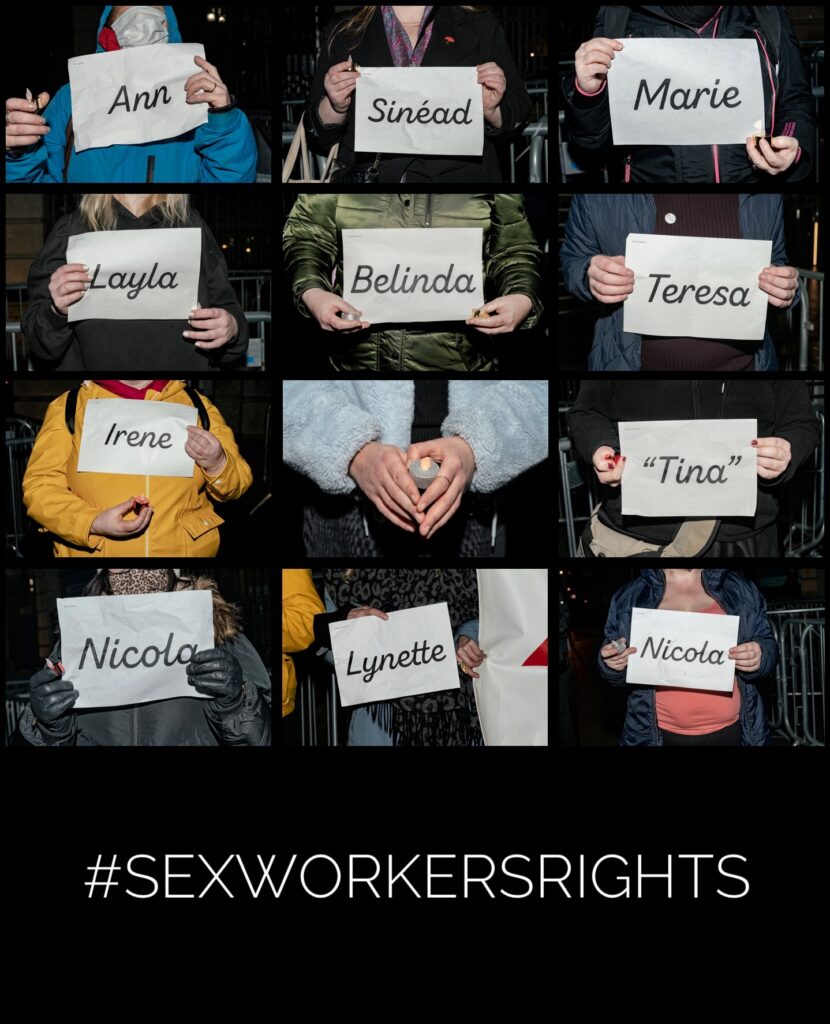
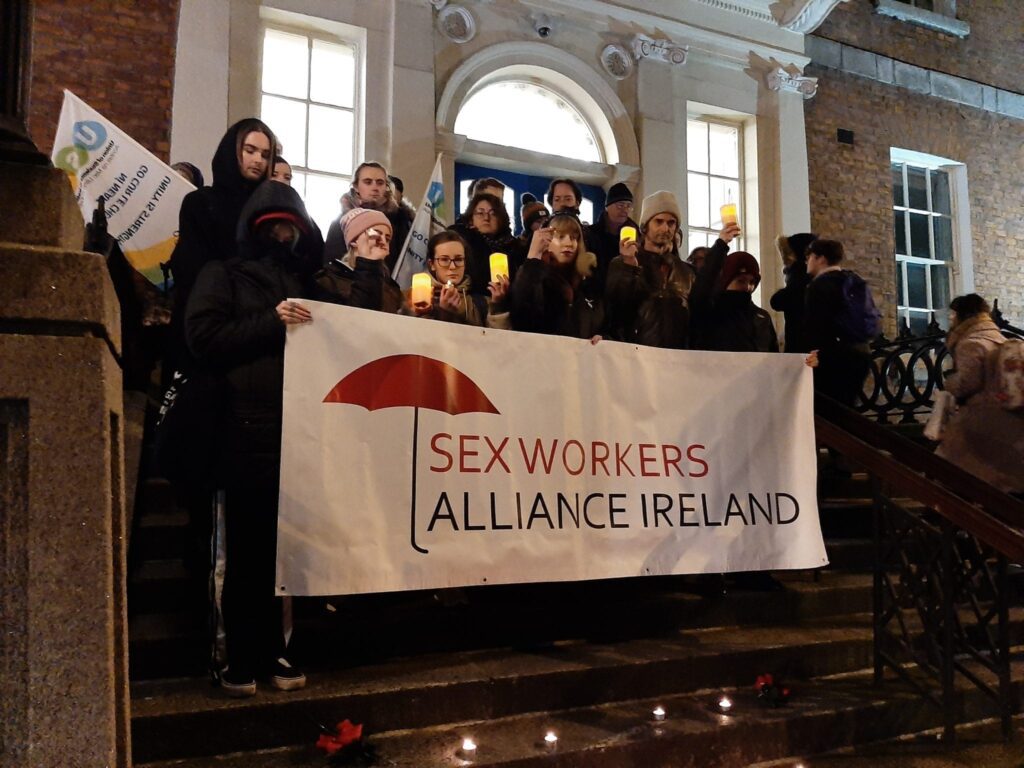
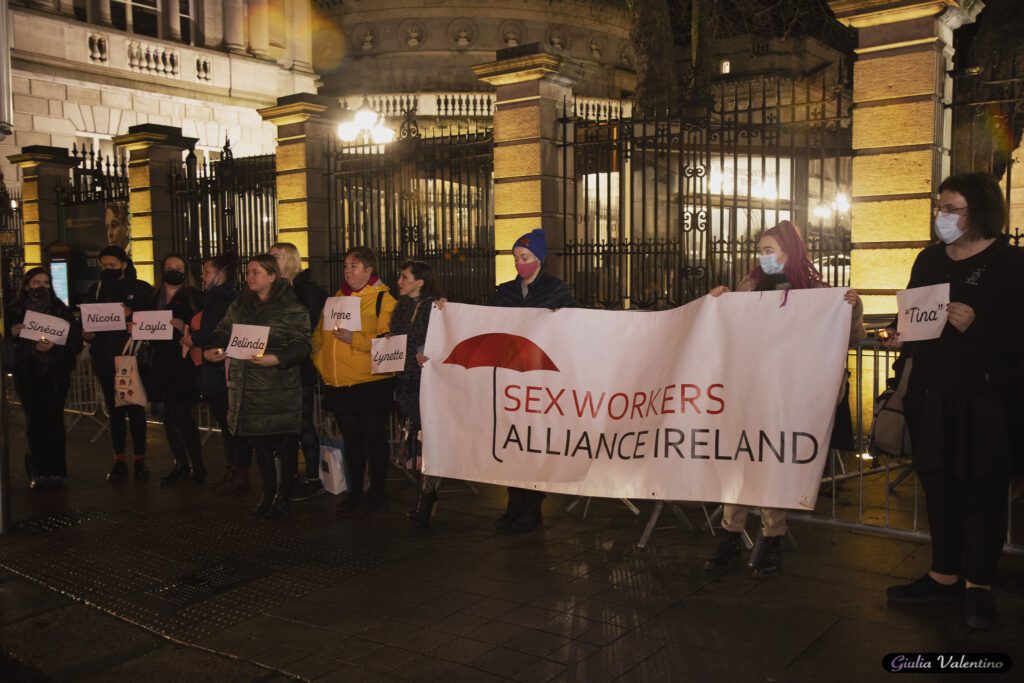
The Sex Workers Alliance Ireland (SWAI) invites all sex workers, supporters and allies to join us at a candlelit vigil to mark International Day to End Violence Against Sex Workers #IDEVASW.
The review of the laws governing sex work has stalled, Garda “welfare checks” have resulted in sex workers being evicted and sex workers have been deported during a global pandemic.
We have also seen some more prosecutions of violent criminals who attacked sex workers in the aftermath of the change in the law in 2017. For the second year in a row Ireland languishes in the Tier 2 Watchlist of the Trafficking in Persons report. Despite the promises of client criminalisation fewer trafficking victims have been identified and violence against sex workers has increased by 92%.
Stigma against sex workers rages on and affects the health, safety and security of sex workers in Ireland. We will have a moment’s silence for those who have suffered violence and lost their lives due to this abhorrent stigma.
We ask you to join us on Friday Dec 17th to call for an end to violence against sex workers, and to acknowledge that our laws do not address the root needs of sex workers, which are rights, health, safety and security.
Please contact Linda privately & confidentially for more information or join us at 6:30pm outside Leinster House. Email: linda@swai.eu
This Trans Day of Remembrance LGBTQI+ organisations must stand with the Sex Workers Alliance of Ireland (SWAI) when we call for the full decriminalisation of sex work. Any alternative is putting the health and safety of trans people at risk.
Aoife Bloom, board member of SWAI says “Today, on Trans Day of Remembrance 2021 we demand that society acknowledges how the majority of trans people who were killed in 2021 were trans sex workers.
2021 is a record-breaking year for violence against trans people. 375 gender diverse people were murdered and the majority of those murdered were black and migrant. Over half of those murdered were sex workers. When we talk about transphobic violence and Trans Day of Remembrance we’re usually talking about trans sex workers of colour.”
Our current model of client criminalisation does not respond to the circumstances of deep poverty, domestic violence, homelessness, precarity and drug use that may lead to people selling sex. Sex workers exist on the sharp end of misogyny, racism, transphobia and other forms of marginalisation. Sex workers must work alone to work legally which increases our vulnerability.
How long more can government, health authorities, and gender equality bodies here ignore the growing body of evidence that shows that their policies are damaging and endangering to the physical and mental health of this precarious group of people?
SWAI demands that organisations that claim to support trans people start to advocate and agitate for the full decriminalisation of sex work. Decriminalisation is essential for combating trans marginalisation and HIV rates, building trust with marginalised communities and providing access to sexual health supports. You cannot be pro LGBT rights without being pro-sex worker rights.”
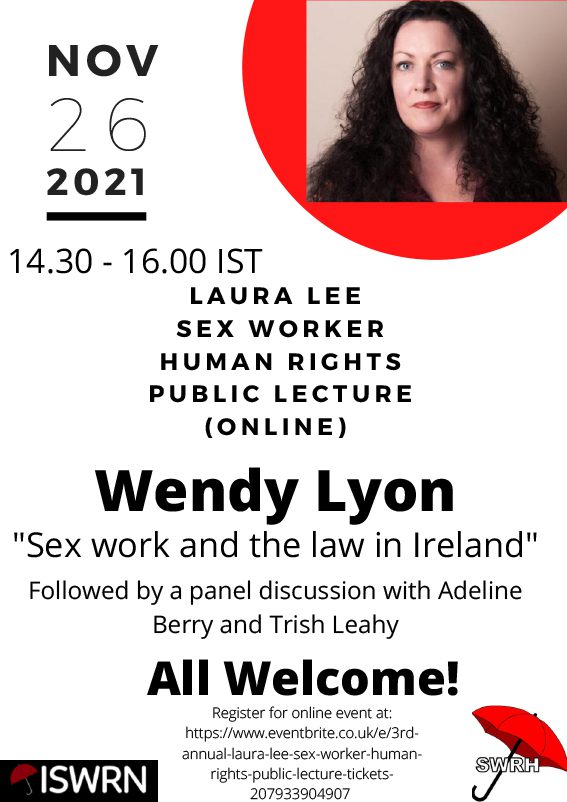
The third annual Laura Lee Sex Worker Human Rights Public Lecture will take place online on the 26th of November from 2:30 – 4pm, with a keynote address from Wendy Lyon, solicitor.
The keynote address will be followed by a panel discussion with Adeline Berry and Trish Leahy.
Aoife Bloom, board member of SWAI said “The global pandemic continues and while we are slowly reopening some sex workers are supplementing their income through online work. Throughout the pandemic the number of OnlyFans content creators increased dramatically which undoubtedly increased the profits for the shareholder immensely.”
She continued “Sex workers are familiar with exclusion from financial platforms. PayPal, which have its European headquarters in Ireland, have closed the accounts of sex workers, refused to pay out the remaining balance which amounts to stealing money, even for those who do not use the platform to be paid for sex work. GoFundMe, a popular crowdfunding site that many trans people use to raise money to pay for the surgeries they do not have access to here in Ireland, does not allow sex workers to use their platform. Our COVID hardship fund in 2020 sought to get cash straight into the hands of sex workers who really needed it and we struggled with a reliable way to deliver it. May we remind people that sex work in Ireland is not illegal, at least according to the proponents of the Nordic Model of client criminalisation in Ireland.”
“These new regulations would have been a fallout from the FOSTA SESTA laws, introduced in the United States in 2018. These laws made advertising sex work illegal which meant workers could no longer use these sites to find clients and many were forced back to their exploitative managers (pimps) or working in the street. We have seen that these third parties have contacted OnlyFans workers in the wake of the proposed changes. Stigma and marginalisation make sex workers reliant on third parties which opens them up to exploitation.”
“Reducing the income of sex workers is a core tenant of the End Demand model of client criminalisation. Many sex workers were not included in government supports which meant that over 50% of the sex workers we spoke to were unable to give up in-person work. As we have stated time and again reducing the income of sex workers does nothing to end exploitation and trafficking in the industry and in fact make sex workers less safe. Sex workers could have been forced to move away from OnlyFans into in-person work. This loss of income could have forced workers into taking risks such as not using condoms or taking on clients that they would normally turn down.”
“Despite the claims of anti-sex work organisations in Ireland and elsewhere, there is no evidence that people have been coerced into creating content. The platform allows workers to set their own time, be their own boss and avoid exploitative pornography production companies. It is clear that anti-sex work ideology is more important than mitigating risk for people working in the industry. These financial institutes claim a moral authority but continue to work with companies that are responsible for climate change, or the opioid crisis.”
“Sex workers are people, it seems we have to remind the world of this. Sex workers are excluded from financial institutions and social media platforms, even when the mantra for the past 18 months has been to stay indoors. The organisations calling for this exclusion have dark histories of religious oppression and anti-choice rhetoric, including in Ireland. Make no mistake, they will not stop at excluding sex workers, other marginalised people will be next. Where will this end?”
“Sex workers are the canaries in the coal mine for many regressive laws and regulations. Decriminalisation of sex work is the first step in ending the stigma of our work. We are entitled to work as safely as possible. Decriminalisation will not legalise exploitation or trafficking. Our current legal model is failing sex workers and has done nothing to keep us safe since its introduction.”